
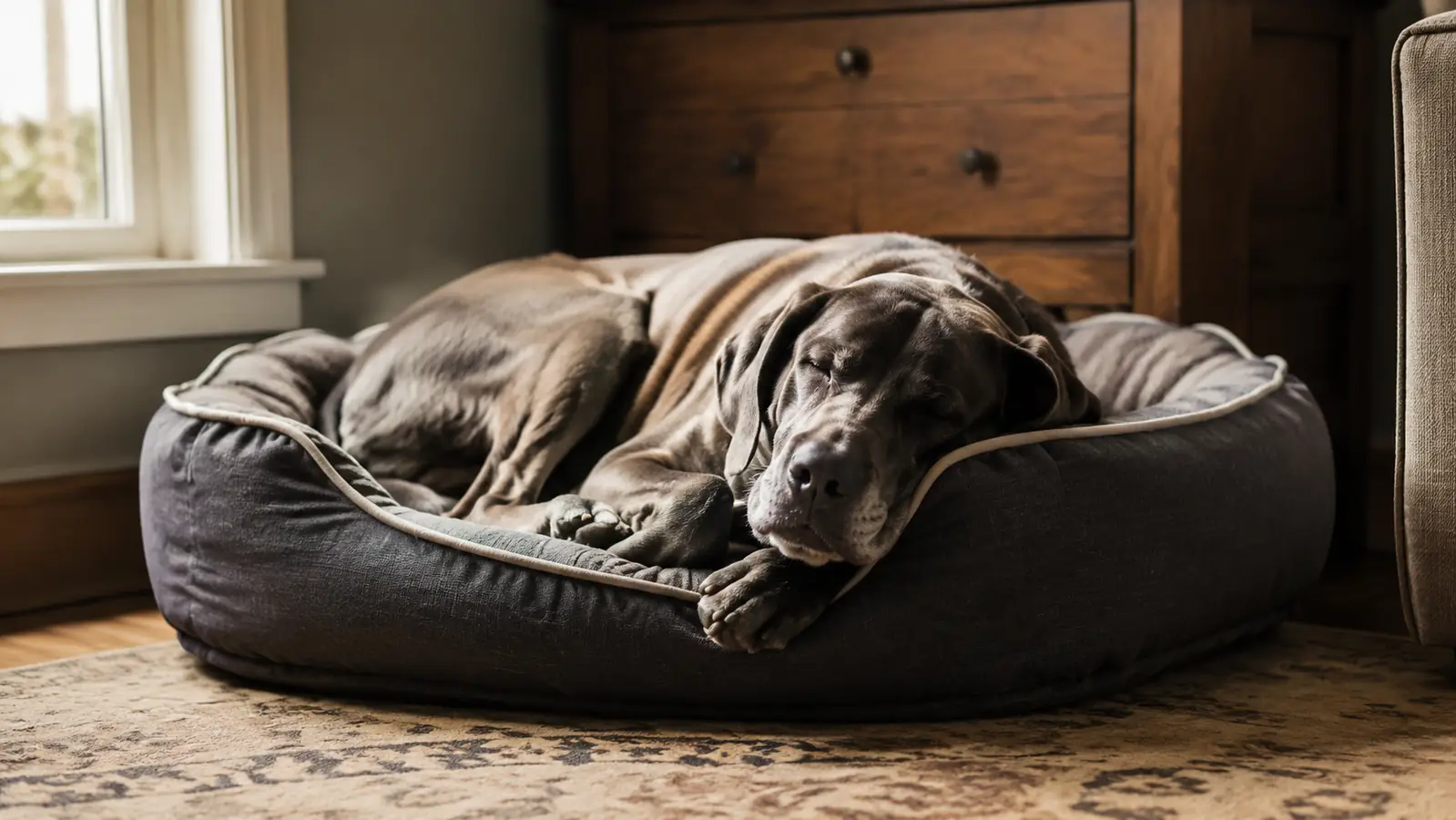
Most of last winter, Juno couldn't get comfortable enough to stay asleep. She would circle her old bed, fold herself down, and then push herself right back up ten minutes later to start the whole routine again. Some nights she gave up and stretched out on the bare floor, and that is when I realized how much hip pain was really costing her.
I'm Marla, and Juno is my 62-pound lab-hound mix. She's eight years old and her hips have been stiff since she spent years running the trails around our house outside Asheville. I'm not a vet and I'm not going to hand you a medical chart. What I can share is the routine that worked for us, one night at a time. The EHEYCIGA orthopedic dog bed is only part of that routine, but it is the part that made everything else possible.
Why Sleep Is Where I Started
When a dog's hips hurt, sleep stops being automatic. It becomes a careful negotiation of angles and surfaces. A dog who cannot settle cannot rebuild the strength or patience she needs during the day, and an exhausted owner is not much better. I learned this the slow way. Before I changed anything else, I looked at where Juno was actually sleeping.
Her old spot was a flat, thin mat on a hardwood floor. It offered her almost nothing. I had tried folded quilts and an old crib mattress, but those only let her body sink into a shallow curve that put more pressure on her hip. What she needed was a surface firm enough to hold her shape, soft enough to take pressure off the joint, and big enough for a 62-pound dog to sprawl when she wanted to.
Some of what I tried was a waste of money. A flat foam pad slid around on the floor. A heated blanket made her too warm and she kicked it off. The EHEYCIGA bed was the first thing that stayed where I put it and gave her enough room to stretch out. But changing the bed alone was not enough. I had to change when and where she slept as well.
Start With a Surface That Supports the Hips
The right bed gives a sore hip somewhere to rest instead of pressing into the floor. See the EHEYCIGA bed that helped Juno settle for longer stretches.
Amazon Check Today's Price on Amazon →Step 1: Put Memory Foam Under Her, Not Just Cushioning
When I finally brought home the EHEYCIGA orthopedic bed, I did not expect much. The bed was simply the right kind of support. The memory foam core firms up when she lies down and softens with her body heat, so her hip rests in the foam instead of pressing into the floor. The sides give her a place to put her head and, just as important, a sense of being tucked in.
The first night Juno slept for two hours without shifting. That may not sound like much, but for a dog who had been getting up every twenty or thirty minutes, it was the first sign that the bed was holding her hip where it needed to be. By the end of the first week, she was choosing to climb into the EHEYCIGA bed on her own, and she stayed in it until my alarm.
You do not need the most expensive bed on the market, but you do need to look for three things: a high-density foam core, a waterproof cover, and sides that are tall enough for your dog to rest her head on. The EHEYCIGA bed checks all three for us, and I would look for those same three things in whatever bed you choose.
Step 2: Put the Bed Where She Already Chooses to Sleep
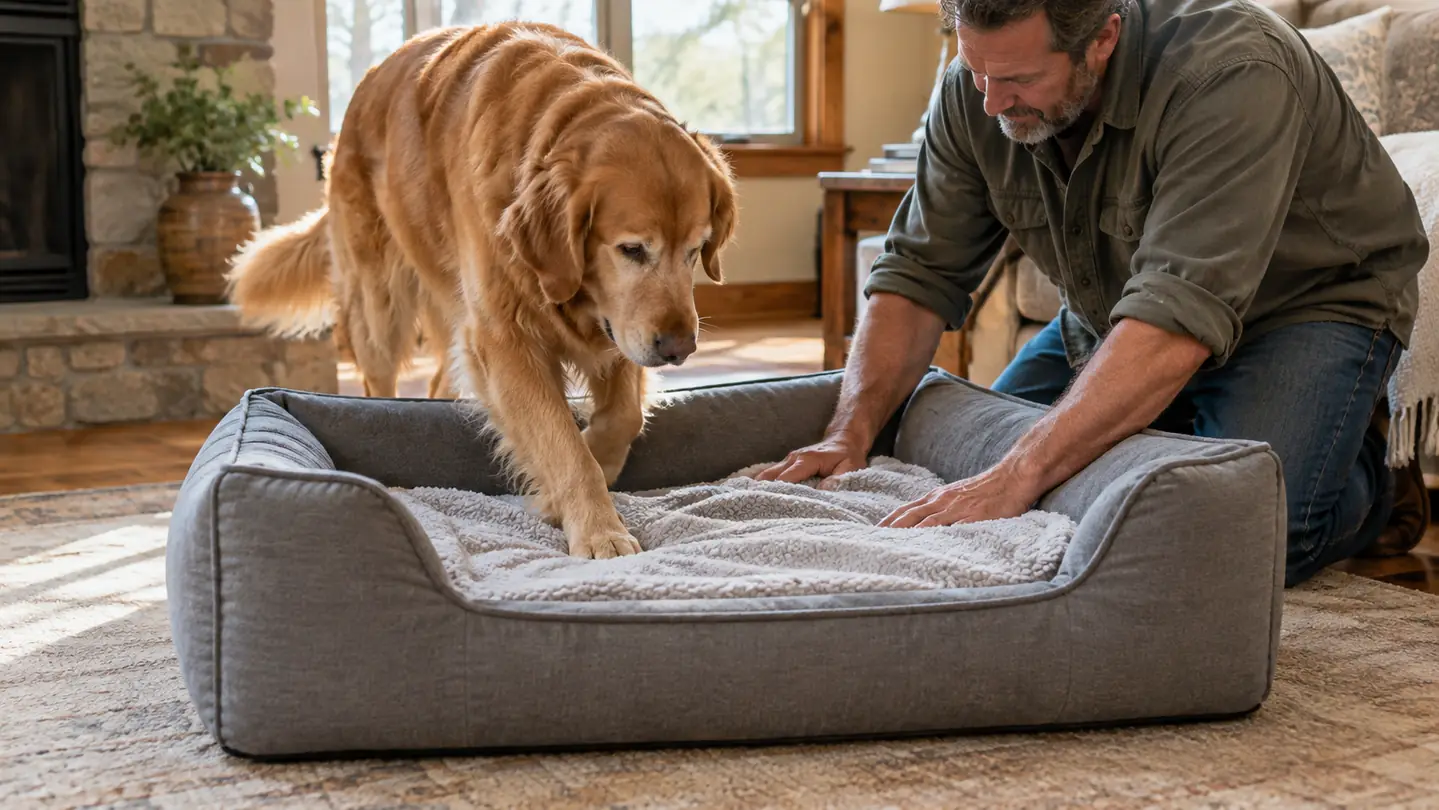
A bed only helps if the dog actually uses it. I first set Juno's EHEYCIGA bed in my bedroom because that was where I wanted her to sleep. She walked past it for two nights. Then I moved it to the corner of the living room where she had always flopped down after dinner, and she climbed in within five minutes. Dogs are creatures of habit. If your dog has a favorite spot already, work with that spot instead of asking her to learn a brand new one.
Location also affects how well she can settle. Keep the bed off the main path through the room so nobody has to step over her, and keep it away from drafty floor vents or cold windows. Juno's bed sits against an interior wall where the temperature stays steady. If your house is on two floors and your dog follows you around, it may be worth having a second bed on each level, but start with one in her usual place and see how she adjusts.
One warning I would add: don't put a new bed in a spot where the dog already struggles to settle. If the corner is next to a window where she barks at every sound, move the bed to a calmer corner. Juno's bed used to be near the front door, and every delivery truck woke her. Since I moved it to the far wall, she has stopped lifting her head at every noise.
Step 3: Keep the Last Hour Before Bed Quiet
Hip pain seems to get worse when a dog is tense. I noticed that Juno slept worse on evenings when we had people over or when she spent the last hour before bed chasing a scent around the yard. Now I wind things down about an hour before bedtime. No wrestling, no long walks, no excited training games. Just a slow potty break on a loose leash and some quiet time near her bed.
I also use that quiet hour to check the bed. I smooth the cover, fold a small blanket into a pillow for her head, and make sure nothing has bunched up under the foam. The routine itself seems to tell her that sleep is coming. By the time I turn out the light, she is already curled up with her chin resting on the side of the EHEYCIGA bed.
If your dog is the type who will not settle unless you are nearby, put the bed on the floor beside your chair or bed for the first few nights. Juno needed to know she was not being exiled. Once she understood the new bed was hers, she started going to it on her own before I even invited her. That little bit of patience in the beginning saved us both a lot of frustration later.
Step 4: Make the Middle of the Night as Boring as Possible
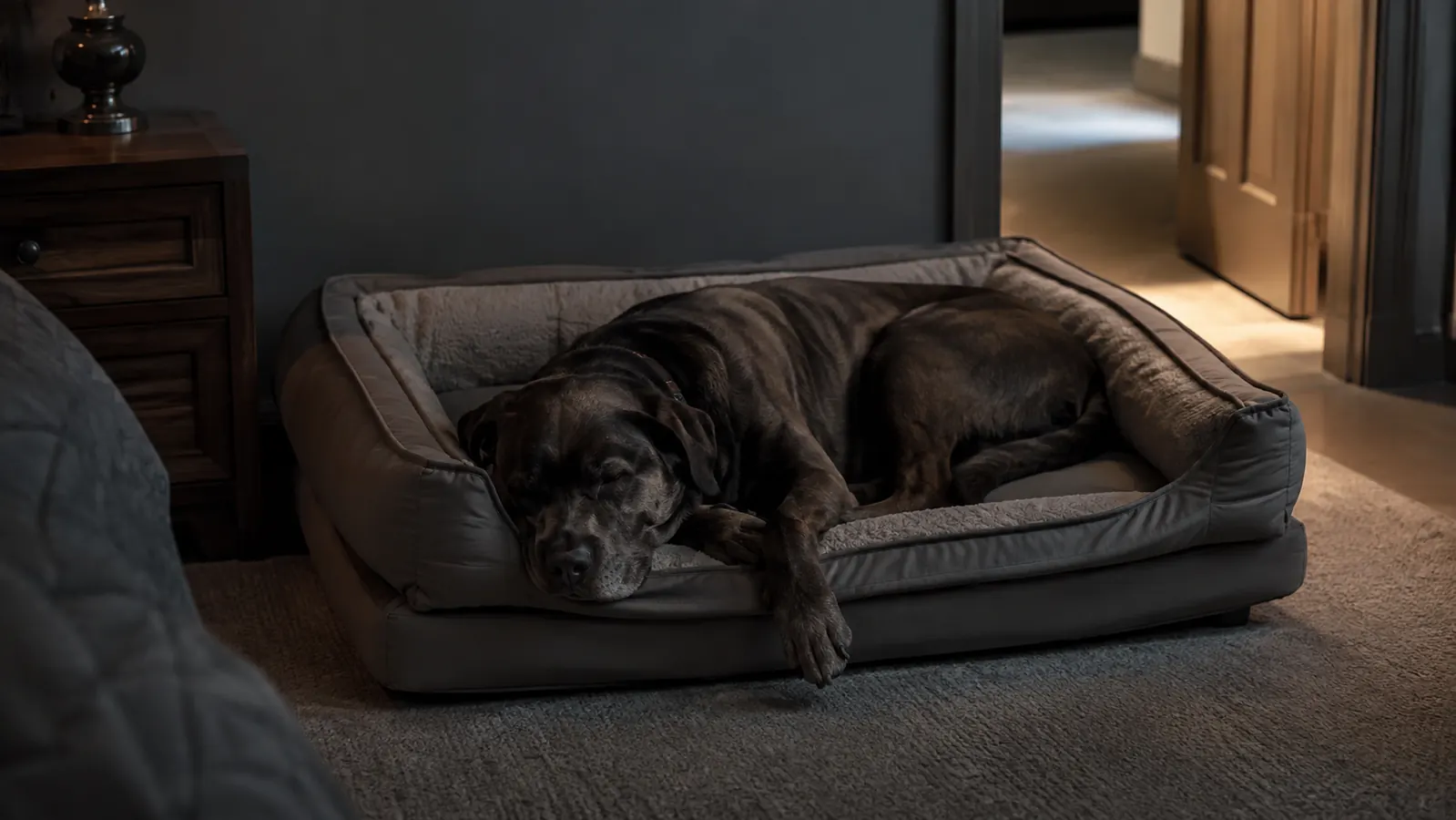
A dog who has to get up in the middle of the night often can't get back to sleep easily. Once Juno is up, her hip stiffens and she starts to pace. That is why the last potty break of the night is the most important one. I take her out on a short leash to the same patch of grass, keep the walk slow and boring, and bring her straight back inside. No treats, no bright lights, no conversation. The idea is to make waking up in the middle of the night less appealing than staying asleep.
I also stopped leaving a full water bowl in the bedroom. Juno drinks plenty during the day, but a full bowl right before bed means she is more likely to wake up needing to go out. If she does wake up anyway, I keep my voice low and my movements slow. The faster she gets back onto the bed, the less time her hip has to stiffen on the cold floor.
Try not to react when she gets up. I used to turn on a light and speak in a soothing voice, but that only woke her more. Now I stay quiet and let her find her way back. If she is truly struggling to get up, I help her by placing a hand under her chest. A gently lifted front end takes weight off her hind legs and makes the return to the bed a little easier.
Step 5: Watch the Changes That Mean Something Is Helping
The real test of a sleep routine is not one perfect night. It is the pattern across two or three weeks. For Juno, the signs were small at first: she stopped rearranging her bed before lying down, she stopped sighing and shifting every few minutes, and she started sleeping deeply enough to dream. Her first truly restful nights came about ten days after I changed her surface and her routine.
Keep a simple note of how many times your dog gets up at night. Before the EHEYCIGA bed, Juno was up three or four times a night. By the third week, she was down to one, and most nights now she sleeps through until my alarm. That kind of pattern tells me the surface and the routine are doing their jobs. If your dog seems to be in more pain even with better sleep, talk to your vet. No bed can replace a medical opinion.
Pay attention to the whole night, not just the beginning. Some dogs settle easily at first and then wake up at 2 A.M. Juno used to be fine until about 3 A.M., when her hip would start to ache. A dog who can fall asleep but cannot stay asleep may need a different kind of support, or she may need to go out later than you think. The pattern matters more than the first hour.
What Else Helps
The bed and the routine were the biggest pieces, but they were not the only ones. A memory foam bed works best when a dog goes into the night already warmed up. A few minutes of slow, firm massage along Juno's back and hips before bed helped her relax in a way that no blanket ever did. I also put a nonslip rug beside the bed. When she does get up in the night, she can step onto something with traction instead of sliding on a smooth floor. Slipping is hard on a stiff hip, and a rug is an inexpensive fix.
I also learned to keep the room dark and quiet. Juno's brain connects darkness with stillness. Our bedroom is not a TV room. Once the light is off, it stays off, and we speak in low voices if either of us needs anything. That discipline, combined with the EHEYCIGA bed, turned a room where she used to pace into a place where she actually rests.
Finally, I stopped making a big deal out of bedtime. The less I fussed, the calmer she was. Now I say the same quiet goodnight, leave her water bowl where she can reach it, and turn out the light. She seems to sleep better when the whole house winds down at the same time.
Every dog is different. What helped Juno might not help your dog on the same timeline, and an older dog with more advanced joint trouble may need more than a new bed and a calmer bedtime. But if you are watching your dog circle and pace at night, those are the two places I would start: a bed that holds her hip instead of letting it rest on the floor, and a calm, predictable path to lights out. That combination made a real difference in our house, and I hope it does in yours.
Make one change at a time. If you switch the bed and change the whole evening routine on the same night, you will not know which one helped. Give the bed a week by itself, then add the quiet bedtime. That is how we figured out what mattered, and it is the same way I would tell a friend to figure it out.
Three weeks after I changed her bed and the routine around it, Juno went from waking three or four times a night to sleeping through until my alarm.
Your Dog Can Get the Same Rest
Start with the surface she sleeps on and build the routine from there. See the EHEYCIGA bed that helped Juno settle through the night.
Amazon Check Today's Price on Amazon →