
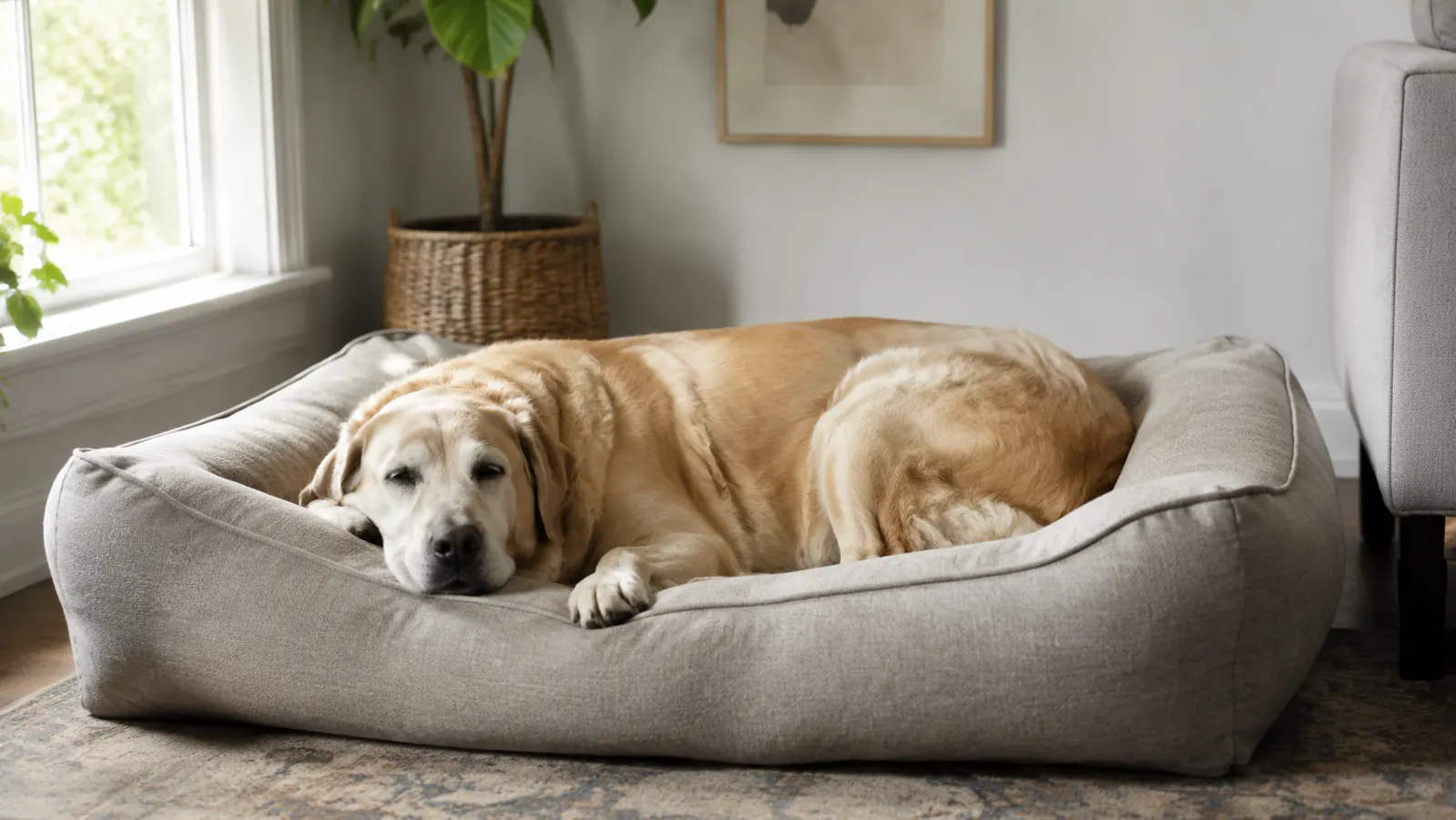
Juno is 62 pounds of lab and hound, eight years old, with hips that have grown stiffer every year since we started trail walking. Around the same time she started hesitating at the bottom of our stairs, I started looking for a dog bed with real support. I have had the EHEYCIGA Orthopedic Dog Bed in our living room for six months now, so here is the long-term version of what that is like.
Before I get into details, let me explain why this review took six months. A new dog bed can feel wonderful for a weekend and still be flat by the third week. I wanted to know how this one held up under daily use, after washing, and after a 62-pound dog settled into the same spot afternoon after afternoon. Six months is not forever, but it is long enough to see what a bed is really made of.
The Quick Verdict
A dense, waterproof memory foam bed with raised sides that Juno has picked for daily naps for six months. It will not fix a stiff hip, but it is a comfortable, stable place for an older dog to rest.
Amazon Check Today's Price →Does your dog deserve a bed that goes flat by week three?
We went through two cheap beds before this one because they flattened in the middle within weeks. Six months in, the foam on this bed still springs back where Juno sleeps. That is the whole reason I switched. If your dog is settling less and shifting more at night, this is the kind of support that makes a difference.
Amazon Check Today's Price on Amazon →How I've Used It
The bed sits in the corner of the living room where Juno can watch the front window and the kitchen. She is not a dog who changes sleeping spots easily, and I did not expect her to take to it right away. For the first two days she sniffed it, circled it, and lay down on the floor next to it. On day three she finally stepped in, and by the end of the first week she was choosing it for her longest nap of the afternoon.
I keep a folded blanket on top because she likes to nest, and I wash the blanket on the same schedule as the cover. The bed itself stays in that corner all day and all night. It is heavy enough that I would rather slide it with my foot than lift it, and I think that steadiness is part of why she trusts it. She does not have to shift when I vacuum around her. She just stays put and keeps dozing.
At night, the routine changed more than I expected. Juno used to get up two or three times and walk to a different corner before settling. During the sixth month, she began staying on this bed through most of the night and only getting up when she genuinely needed to go outside. That is the kind of change I am comfortable attributing to a bed, because nothing else in her routine changed.
Six Months of Daily Use
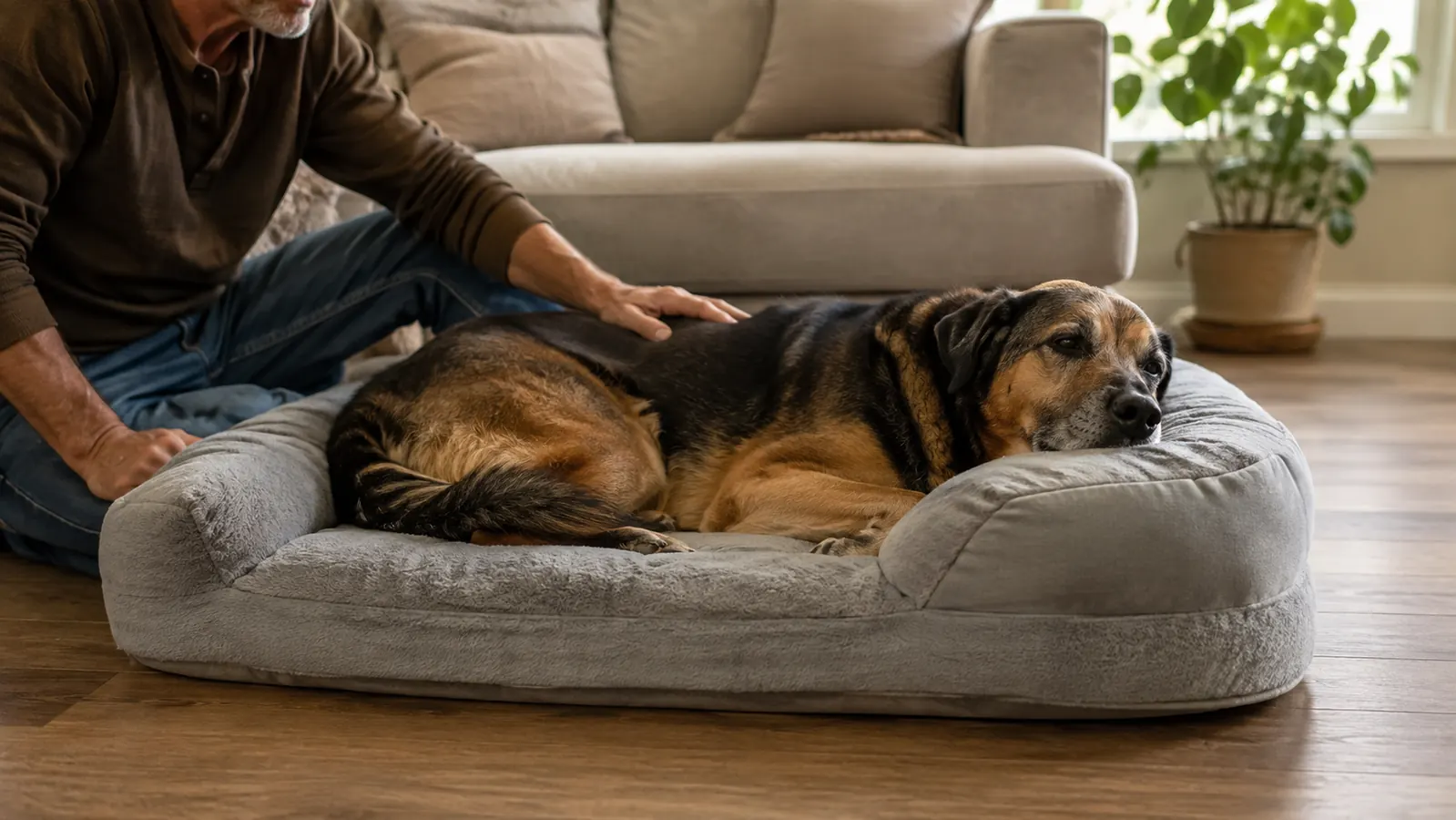
About three weeks in, I noticed she was choosing the bed over the open floor more often. That had simply not happened with the last bed. It is hard to measure relief in a dog, and I refuse to invent a number for it. Juno cannot tell me if her hip feels better, so I watch behavior: how quickly she settles, how much she shifts at night, and how she gets up in the morning.
The honest answer is that she still gets up stiff after a long nap. Some mornings are better than others, and no bed changes that completely. What has changed is that she stops getting up and repositioning. Earlier in the year she would circle, lie down, and then get up a few minutes later, as if no position felt right. Now she circles once or twice, tucks her nose under her tail, and stays there for hours.
On cool mornings, and on damp ones, she also picks this bed over the rug. That tells me the foam is doing at least part of its job. It gives her a firm surface with enough give that her hip is not pressed straight into the floor. I am not a vet, and I have never pretended otherwise. I am just reporting what six months of watching an older dog looks like.
The Foam and the Cover
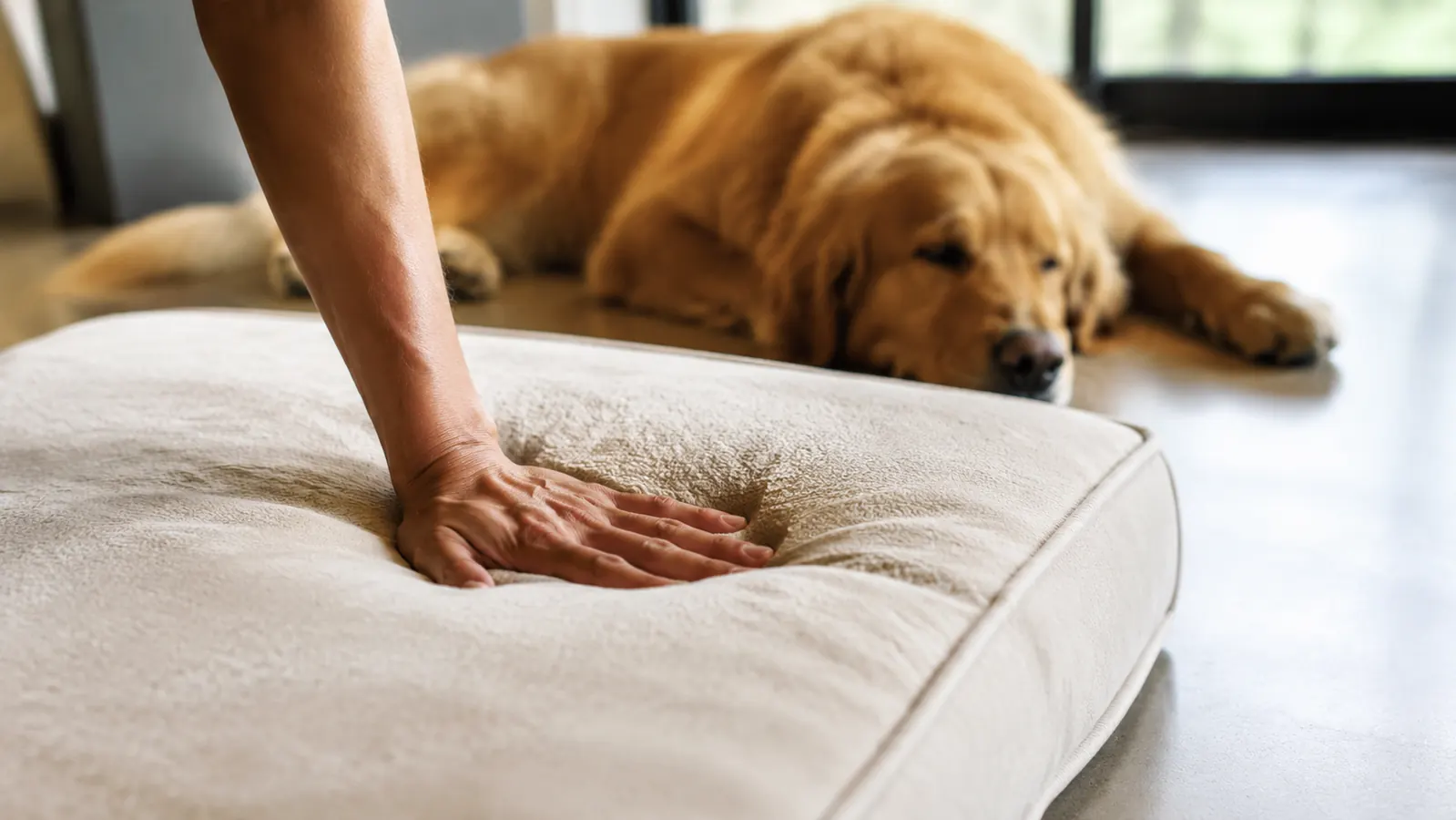
What I care about most in an orthopedic bed is whether the foam holds up where the dog actually sleeps. After six months with a 62-pound dog settling into the exact same center spot, the EHEYCIGA foam has not gone flat. I press on it when I change bedding, and it springs back. The spot by the seam, where she rests her head, looks the same as the rest of the surface.
The cover is soft, which sounds pleasant and also means it collects hair. I wash it every two or three weeks, and it has been through the machine more than ten times without shrinking or losing its shape. The outside cover is not plastic to the touch, which I appreciate, because a waterproof cover that feels like a tarp is its own disappointment. The waterproof layer underneath is real. I have tested that with a full glass of water.
Juno has not had an accident on this bed, so I cannot tell you how it handles a true incontinent episode. I can tell you exactly what I tested: I spilled a full glass of water across the cover, left it for a few minutes, and the foam underneath stayed dry. The liquid beaded and rolled to the edge. That is the level of waterproofing I have lived with.
Six months in, the foam still springs back where a 62-pound dog has slept every single day.
The Raised Sides and the Fit
The sides are the part I underestimated. Juno likes to rest her chin on the edge of a bed while she dozes, and these raised sides give her something solid but gentle to lean on. They are not too tall for her to step over. She walks in without climbing, which matters more now than it did when she was younger.
The bed is large enough for her to stretch out with her legs straight behind her when she is warm. On cold nights, she curls up with her back against the side. I like that the bed allows both, because a dog's preferred position changes as the weather changes.
We have the large size in a corner of our living room, and it fits without crowding. If you are choosing a bed for a giant breed, or you need to put it in a small room, measure the space first. This bed needs floor area, not just sleeping surface, because the sides take up room.
What Has Not Been Perfect
I want to be honest about the downsides because no bed is right for every dog. The soft cover attracts hair, more than the slick indoor-outdoor cover on our previous bed. Juno is a short-coat mix and still manages to leave a layer of hair on the fabric. I keep a lint roller by the chair, and I use it far more often than I would like.
The bed is also heavy and bulky. I am 54, and I do not carry it from room to room. It would not be my first choice for a bed that needs to travel to a cabin or move between two floors every day. It is designed to stay where you put it.
The zipper on the cover was stiff for the first few openings. It loosened up before the first wash, but it was not smooth right out of the box. The seams are sturdy so far, but the cover is still a piece of soft fabric, not a chew-proof shell. A puppy with sharp teeth or a determined digger could probably find the corner stitching. Juno circles and scratches before she lies down, and the stitching has held. I would not tempt a heavy chewer.
That is the honest short list. If those trade-offs sound manageable, this bed is easy to recommend. If they sound like deal-breakers, the next two sections should help you decide.
How This Compares to What We Had Before
Our previous bed was a cheaper fiber-filled pad with a slick waterproof cover. It was fine at first, but by the third month Juno had shoved the filling toward the edges, leaving a shallow dip right where she liked to lie. She stopped using it entirely and went back to the living room rug. That was the moment I started shopping for a bed with a solid core.
This EHEYCIGA bed is built differently. The support comes from one dense foam layer instead of loose fiber, so there is no middle section for a 62-pound dog to push out of place. That is not a small difference. It is the entire reason the bed still looks and feels the way it did in month one.
I will say plainly that a younger dog without joint trouble may not notice the difference, and a less expensive bed could work fine for them. But for a dog who has begun to hesitate on the stairs or to shift around all night, a support layer that does not cave in is worth the extra thought.
What I Liked
- Foam still holds its shape after six months of daily use
- Waterproof layer sits under a soft, non-plastic cover that zips off for washing
- Raised sides give an older dog a chin rest without blocking her step in
- Large enough for a 62-pound dog that sprawls
- Cover washes well and has not shrunk
Where It Falls Short
- Soft fabric cover collects hair and needs regular lint rolling
- Bed is heavy and not easy to move
- Zipper is stiff at first
- Not for destructive chewers or dedicated diggers
- Does not make morning stiffness disappear
Who This Is For
This bed is for someone with a medium to large dog who is getting older, or who has begun choosing the floor over a bed that no longer supports them. It is also for dogs like Juno who like to stretch out but still want a raised edge to lean on. If your dog hesitates at the stairs, shifts positions through the night, or gets up more slowly after a nap, a stable, well-padded bed is one of the easiest changes to make at home.
It will not replace a vet visit, and it will not undo years of hard trail miles. What it does is give your dog a consistent, comfortable place to rest, day after day. In our house, it is the bed Juno returns to every time. That is the highest compliment a dog can pay to a piece of furniture.
One more thing: if your dog sleeps in your bedroom at night or in a crate, order the right shape for that space. This is a rectangular bed with sides, and it takes up a solid footprint. It suits a living room corner or a spot next to your bed better than a small crate.
Who Should Skip It
If your dog is still in the chewing phase, wait. A soft cover is no match for puppy teeth. If you need a bed you can carry from room to room or throw in the car, this heavy design will frustrate you. And if your dog already prefers a cool floor or a mesh cot, a dense foam bed may sleep too warm in the summer months.
A raised mesh bed is often a better summer choice, and some owners keep both. We are keeping this one in the living room all year because Juno uses it. But if an older dog in your house avoids every bed no matter what you try, start with a vet visit before you spend money on a new one.
The Long-Term Verdict
Would I order this bed again? Yes. Would I have ordered it four months earlier? I think so, and I wish I had. The long-term proof is that Juno has stopped asking to get up in the middle of the night as often, she settles faster, and she chooses this bed over every other soft surface in the house.
Part of me still wishes the cover were easier to keep hair off, and part of me wishes the bed were lighter. Those are real annoyances, and I have not hidden them. But when I weigh those against what this bed has done for our evenings and our nights, the answer has not changed in six months. It is a keeper.
Give your older dog a spot that does not go flat.
After six months and countless naps, this is still the bed Juno chooses. That is the result I wanted when I bought it.
Amazon Check Today's Price on Amazon →