
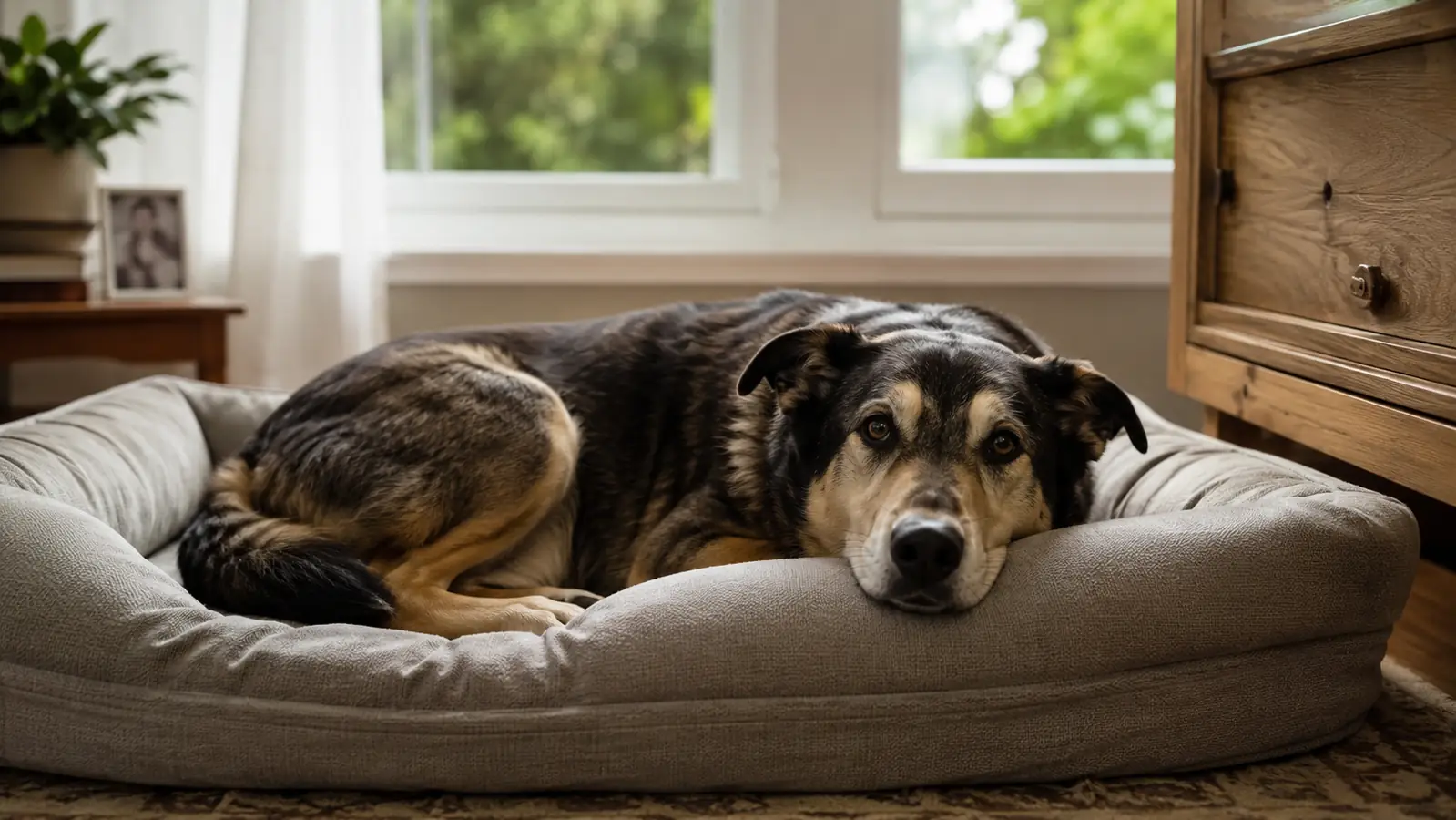
Last spring I did something that felt a little foolish at the time. I bought two dog beds and set them up side by side in our living room like I was hosting a dog bed taste test. In one corner, the EHEYCIGA orthopedic dog bed sat in the large size, thick memory foam base, three raised sides, waterproof liner under the cover. In the other corner, a standard memory foam bed, the sort you can order from just about any store, soft, flat, and noticeably lighter on the wallet. My dog Juno watched me from halfway down the stairs. She is eight years old, 62 pounds, a mix of lab and hound, and for the past two years she has been stiff in the hips after long trail walks. The stairs to the backyard are part of her day, and she takes them more carefully than she used to. I wanted to know if the orthopedic bed was genuinely worth the difference or if I was paying extra for a label on a box. So I bought both, and I let Juno vote with her body over the next six months.
Six months later, here is the short answer. The EHEYCIGA bed earned its place in our house, but it is not the right bed for every dog, and I would not buy it for a young, healthy animal that simply wants a soft spot to flop. The standard memory foam bed is a good bed. It is soft, it is cheap enough to buy two of, and it fits places the orthopedic bed will not go. What it does not do is hold its shape under a heavy dog for half a year, and it offers nothing for a dog that likes to rest her head on something while she sleeps.
| EHEYCIGA Orthopedic Bed | Standard Memory Foam Bed | |
|---|---|---|
| Foam support | Thick high-density orthopedic foam that still bounces back after six months under a 62 pound dog. | Softer memory foam that felt wonderful at first but slowly settled into a body-shaped dip. |
| Moisture protection | Waterproof liner under the zippered cover, so accidents never soak into the foam. | Most standard beds have no barrier at all; one accident can ruin the whole bed. |
| Raised sides | Three raised sides give an older dog somewhere to rest her head and feel secure. | Flat open surface with nothing to lean on. |
| Upfront cost | Costs more at the register because the materials cost more. | Almost always the cheaper choice, which matters when you need two beds for upstairs and down. |
| Where it fits | Tall and bulky, best in an open corner or beside the bed. | Low and flexible, slides under a desk or into a wire crate without a fight. |
| Durability over time | Six months of daily use and the support is basically the same as day one. | Expected to soften and compress faster, especially under a heavy dog. |
| Best for | Dogs with stiff joints, senior dogs, or dogs recovering from an injury. | Healthy dogs that just want a comfortable place to nap. |
Where the EHEYCIGA Orthopedic Bed Wins
Start with the foam, because that is the whole argument for this kind of bed. I was skeptical when it arrived. I pressed my hand into the surface, and it felt firm in a way that made me wonder if it would be comfortable. Firm is exactly the right word, though, for a dog with stiff hips. When Juno climbs onto the EHEYCIGA bed, she sinks just enough to feel cradled, and then the foam holds her. She does not bottom out onto the floor the way she did on the standard bed by February. Six months of daily use, at 62 pounds, and the support feels the same as it did in October. I cannot say that about the other bed.
The raised sides turned out to matter more than I expected. Juno has always liked to sleep with her head on something. On the flat bed, that meant her head slid off the edge and onto the hardwood floor, and she would jerk awake. On the EHEYCIGA bed, she curls up against one of the raised sides and rests her muzzle right on the edge. I noticed it the first week, and she has done it every night since. The waterproof liner is the feature I did not know I needed. Pepper, our eleven-year-old cat, has a sensitive stomach, and over six months there were two incidents in the middle of the night. With the standard bed, either one would have soaked into the foam. With the EHEYCIGA, I zipped the cover off, washed it, and the foam stayed dry.
Where the Standard Memory Foam Bed Wins
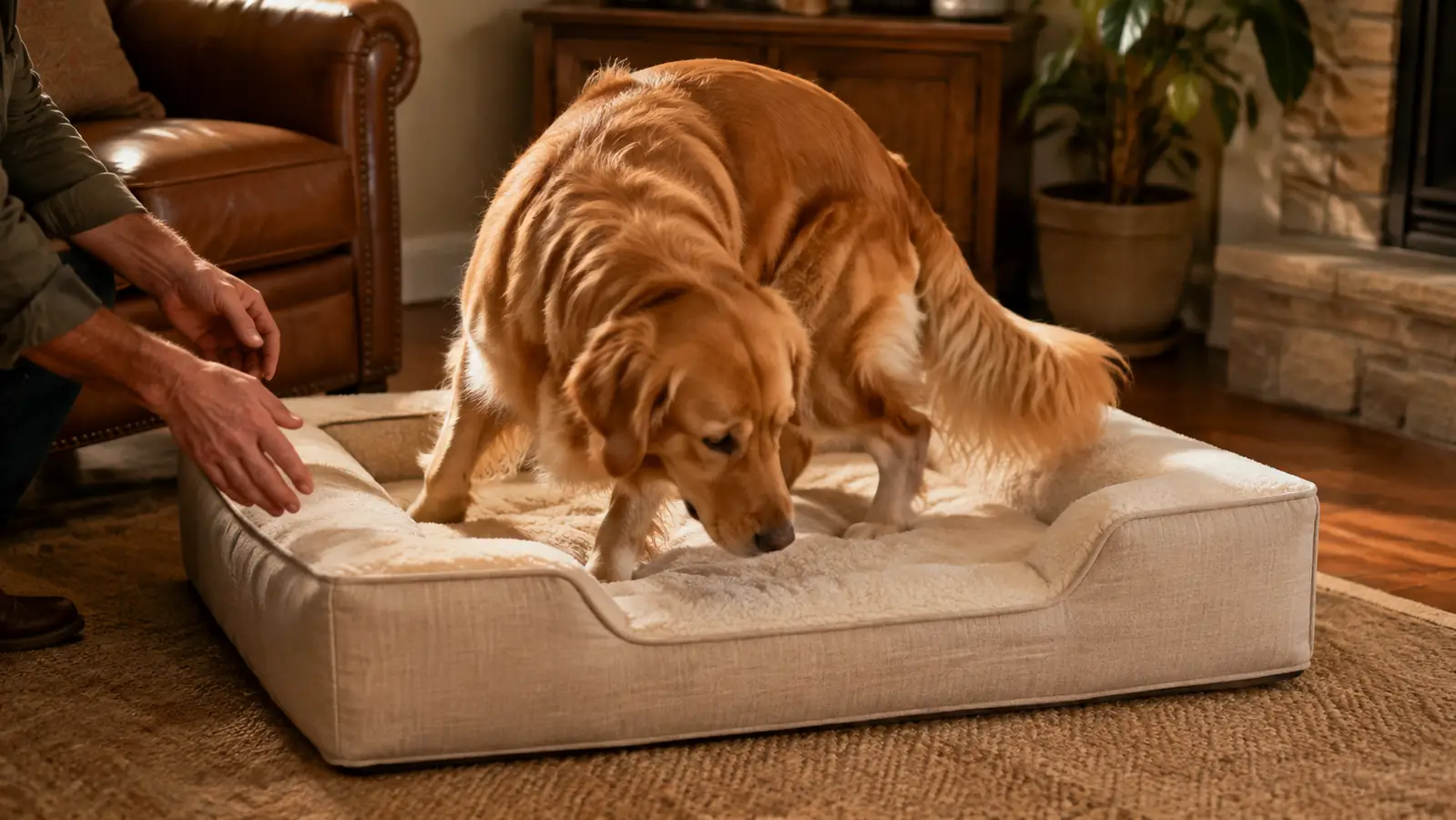
Now for the honest part, because the standard bed is not a bad product and it beat the EHEYCIGA on several things that have nothing to do with foam quality. The first is the up-front cost. You can often buy two standard memory foam beds for less than the price of one orthopedic bed, and in a house with two floors, two beds might serve an old dog better than one remarkable bed. Juno spends her days downstairs in the living room and her nights in our bedroom upstairs. If money were tighter in our house, I would rather have a decent standard bed in both rooms than a single orthopedic bed she has to climb stairs to reach.
The second advantage is where the bed fits. A flat memory foam pad is low and flexible. It slides under a desk. It fits inside a wire crate. It tucks behind the passenger seat of the car for road trips. The EHEYCIGA bed asks for open floor space. It is tall enough that Juno has to step up onto it, and the raised sides mean it does not fold down or wedge into a tight corner. If your dog sleeps in a crate, if you travel, or if your house simply does not have a spare corner big enough, the standard bed is the easier answer, and honestly the better one.
Six months in, the EHEYCIGA still supports her the way it did on day one. The standard bed softened into a dip. That difference is the whole story.
What Six Months Taught Me
Here is the thing I wish someone had told me before I started comparing beds: the bed is one piece of a bigger picture. When Juno first got stiff, our vet at a small practice about twenty minutes from the house talked to me about weight management, steady low-impact exercise, and the surfaces she walks on. We put a runner on the hardwood stairs. We shortened a few trail walks. We added padding to the spots where Juno likes to lie on the floor, not just the bed we wanted her to use. The EHEYCIGA bed fits into that plan as the place she rests after a walk, but it is not a treatment for anything. If your dog is limping, struggling to stand, or suddenly reluctant to jump, the right first step is a vet, not a shopping cart.
The other lesson is that dogs vote with their bodies. Juno stopped using the standard bed after about a month. She would lie next to it on the floor or stretch out on the cool tile in the kitchen, and at first I took that personally. Then I realized the bed had developed a soft dip in the middle where she slept, and she was choosing a flat, firm surface over a sagging one. She has never once skipped the EHEYCIGA bed. Every night after dinner she climbs up, circles twice, and settles with her head on the raised side. Eight years of living with this dog have taught me to trust that kind of consistency.

What to Look For in an Orthopedic Bed
If you decide the orthopedic route is right for your dog, the brand matters less than the construction. Look for a base that does not compress completely when you press down hard, because the whole point is support, not softness. Look for a removable, washable cover, because old dogs have accidents and young dogs have muddy paws. Look for waterproofing if your dog drinks a lot of water, drools, or has any kind of incontinence. And measure your dog before you order, since the difference between a medium and a large bed is the difference between a good night and a cramped one.
I am not a vet, and I want to say that plainly. I can tell you what worked in our house for one 62-pound dog with stiff hips, but your dog's situation is her own. If joint pain is new, or if your dog seems to be getting worse, please talk to a veterinarian before you spend money on any bed. A bed made a real difference for Juno's comfort. It did not replace the vet's advice about weight and exercise, and I would not want anyone to read this and think it could.
What I'd Tell a Friend
If we were sitting at my kitchen table and you asked whether to spend the extra money on the orthopedic bed, I would ask you one question first: how old is your dog, and does she seem sore when she gets up? If the answer is yes to both, I would tell you the EHEYCIGA is worth trying, especially if your dog likes to lean her head on something. If your dog is younger than five and springs off the floor like a puppy, I would save the money and buy the standard bed. And I would tell you what our vet told me: watch her weight, keep her moving, and let a good bed do the resting part.
One more honest note about expectations. An orthopedic bed is not going to make a stiff dog young again, and any product that promises that is lying to you. What it did for Juno was smaller and more real. She gets up in the morning, stretches, and walks to the kitchen. She sleeps through the night without shifting every hour. She chooses her bed over the floor. That is the outcome I was hoping for when I set up that ridiculous side by side test, and six months later, it is the one I would buy again.
If your dog is stiff in the morning, this is the bed I would buy first
The EHEYCIGA large orthopedic bed held its shape for six months in our house, survived two cat accidents, and gave Juno a place to rest her head every single night. See today's price and current owner reviews on Amazon before you decide.
Amazon Check Today's Price on Amazon →Who Should Buy Which
I can tell you exactly how I would decide if I had it to do over again. Buy the EHEYCIGA orthopedic bed if your dog is middle-aged or older, if she is stiff after lying down, if she has been diagnosed with hip or joint trouble, or if she likes to sleep with her head propped on something. Buy a standard memory foam bed if your dog is young and healthy, if she sprawls flat on her side, if the bed has to fit in a crate or a car, or if your budget needs to cover two beds instead of one. Neither choice makes you a bad dog owner. The right answer depends entirely on the dog you live with.
One more practical note about size. The EHEYCIGA bed I tested was the large size, meant for dogs in Juno's range. If you have a 20-pound dog, the same bed in a smaller size will probably cost less and be easier to place, and the orthopedic foam is the same. Measure your dog from nose to tail while she is stretched out, and give the bed a few extra inches in every direction. A bed that is too small is a waste of money no matter how good the foam is.
And if you are still torn, watch your dog for a week before you buy anything. Notice where she chooses to sleep, whether she props her head on the arm of the couch, whether she seems sore after getting up. The answers will point you to the right bed more reliably than any review, including this one.
The one I would buy again, without hesitation
After six months of side-by-side use, the EHEYCIGA is the bed Juno chooses every night. If your dog has the same story, it is worth checking today's price.
Amazon See the EHEYCIGA on Amazon →