
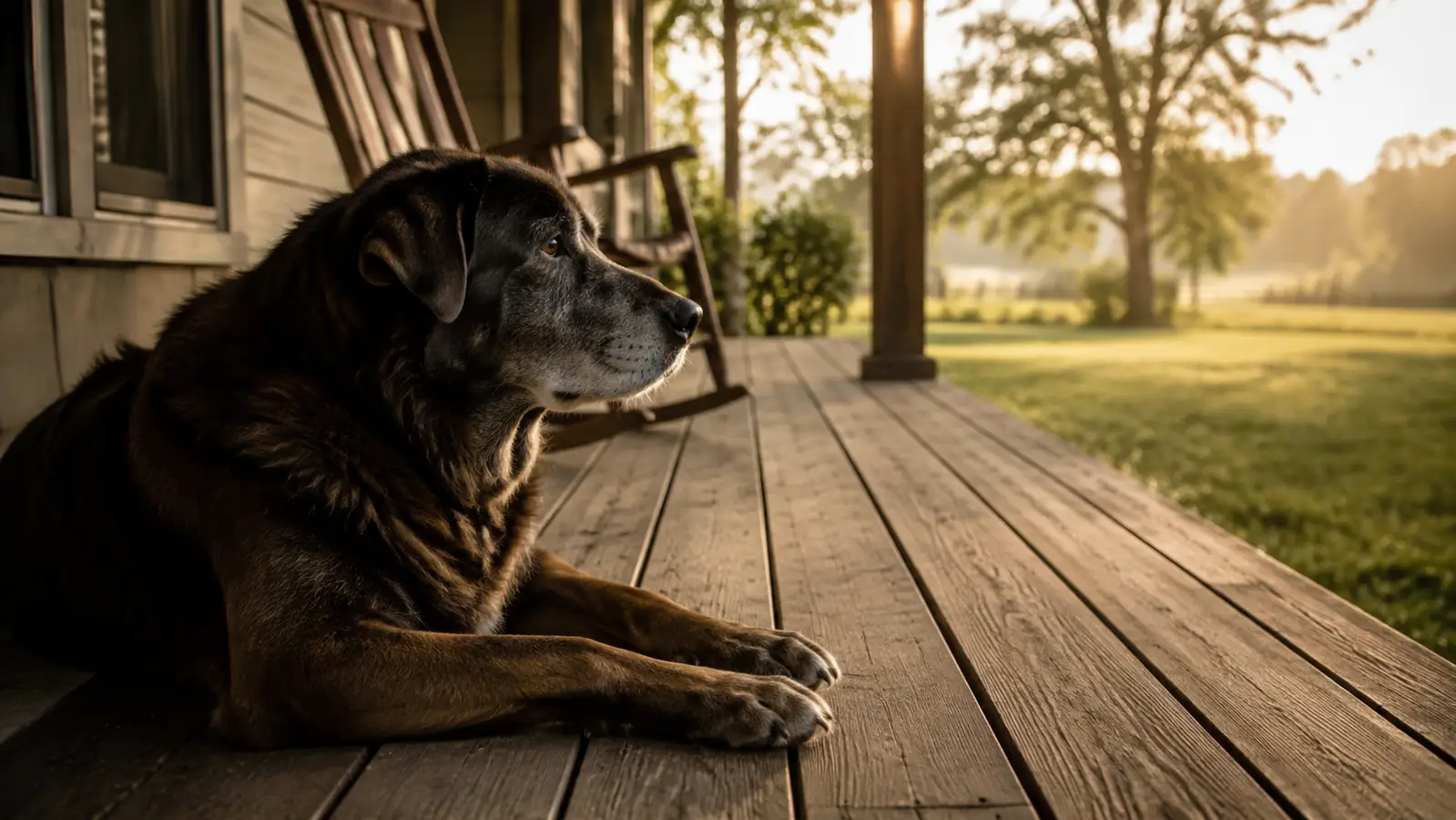
The first sign was not dramatic. Juno, my 62 pound hound-Lab mix, simply stopped bouncing down the deck stairs. She was eight, which the vet kept reminding me is not really old, but her hips told a different story after years of trail walking. Some mornings she would stand at the top of those eleven stairs and put one paw out, then hesitate, as if she needed to think it over. That hesitation is what got my attention, because for eight years Juno never thought anything over.
I am not a veterinarian, and I am not going to tell you to start a supplement before you talk to yours. I can only tell you what we did after our vet gave us the green light. It took one conversation, one supplement, and a handful of small changes around the house that cost almost nothing. The supplement was Nutramax Cosequin for dogs. I will get to the exact routine in a minute, but the short version is this: Cosequin helped Juno most when I paired it with slower mornings, fewer stairs, and a close eye on her weight.
The joint supplement we started after the vet gave us the green light
Nutramax Cosequin for dogs was the first name our vet mentioned and the one Juno has taken every day since. It is the chewable tablet we built the rest of our routine around.
Amazon Check Today's Price on Amazon →The Five-Part Routine That Helped Juno
Step 1: Talk to Your Vet Before You Add Anything
When I first noticed Juno hesitating at the top of the deck steps, my instinct was to order the most popular joint supplement I could find and hope. I am glad I did not. Instead, I booked an appointment at the small vet practice twenty minutes from our house. Our vet watched Juno trot down the hallway, moved her legs carefully, and asked questions I would not have thought to ask: had anything changed in her appetite, did she still jump onto the couch, did she seem worse after wet or cold weather. The point was to rule out causes that a supplement cannot fix.
Her weight mattered too. Juno weighed 64 pounds that day, which was a little above her usual 62. Our vet said that for a dog built like hers, even two or three extra pounds can make stiff hips feel worse, because every step carries that extra load. She suggested we start with a joint supplement and also trim a small number of calories. That two-part answer, supplement plus weight, is the reason I did not pin all my hopes on a bottle of chews. I left with a list of things to watch and a blank notebook.
I also used the visit to ask whether Nutramax Cosequin was worth trying compared with cheaper store brands. Her answer matched what I later saw on the label: look for established ingredients and a company with a long history in pet supplements. Nutramax is one of those names. She also told me not to expect an overnight turnaround, which I appreciated, because there are plenty of products that promise one. The vet said to give any joint supplement a fair trial of at least six to eight weeks before deciding whether it was helping.
Step 2: Start With a Daily Joint Supplement and Give It Time
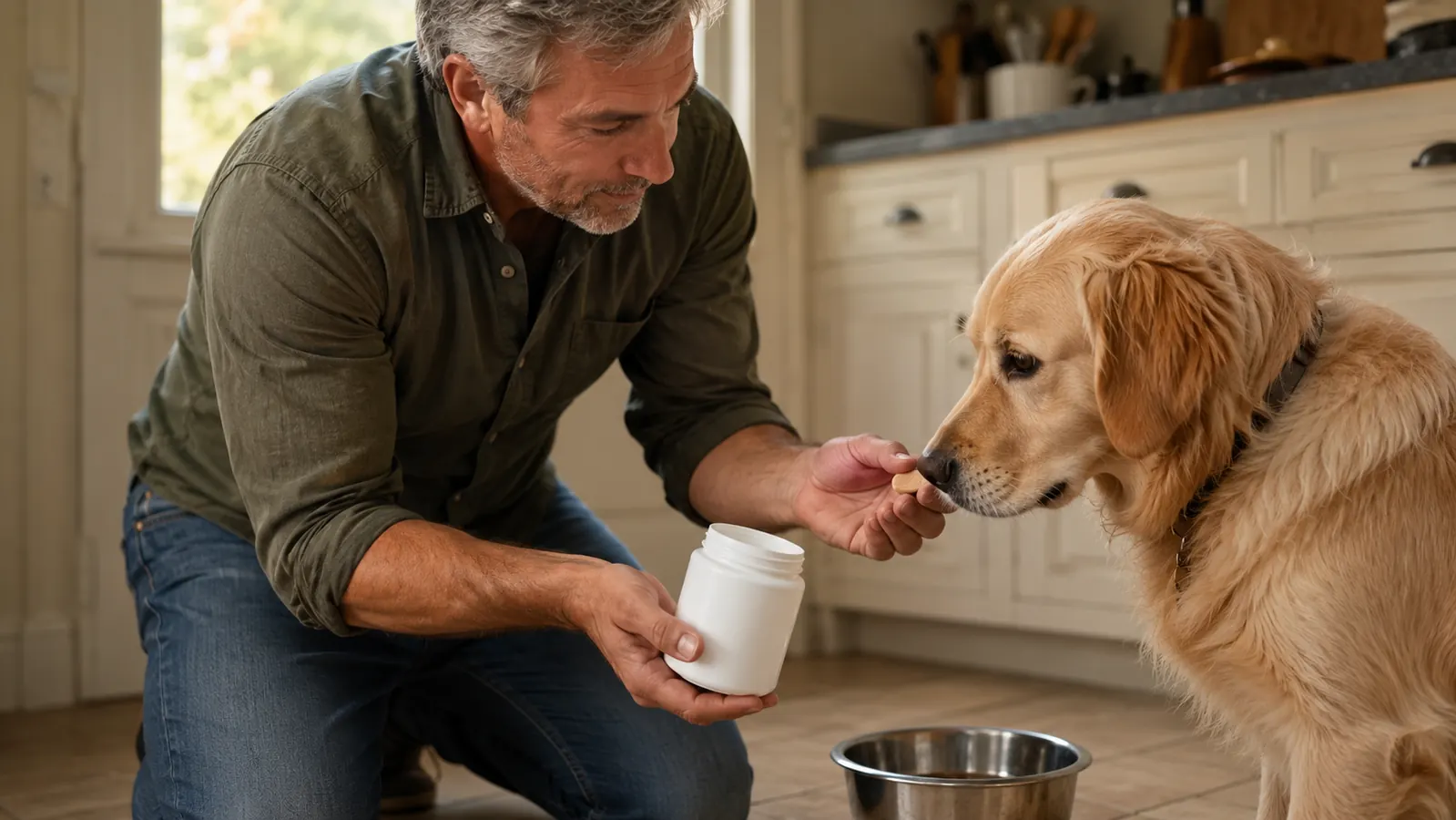
The product I settled on was Nutramax Cosequin, and I want to be plain about why. It was the first name our vet mentioned, the brand has been making joint supplements for dogs for a long time, and the label lists ingredients I could understand: glucosamine, chondroitin, MSM, and hyaluronic acid. Cosequin comes in a chewable tablet, which matters when you have a dog who will happily eat anything at dinnertime. I gave Juno one chew with her breakfast, following the directions on the bottle.
The part nobody tells you is that supplements take time. The first week, Juno did not seem any different. The second week, she still had slow mornings. I kept giving the chew every day and tried not to miss one, but I also did not expect a light switch. Around the third week, I noticed she was getting off her bed without that little pause. By six weeks, she walked to the end of the driveway and back without her hitch step. I know it was around week three because I had started writing it down. That notebook is the reason I trust what I am telling you.
One small note about giving the tablet: during the first few days, Juno did not always take it on her own. I broke the chew in half and pressed it into a spoonful of plain canned pumpkin. After about a week, she started taking it straight from my hand. I give it at breakfast, at the same time every morning, so it became part of the routine instead of something we both dreaded.
Step 3: Change How Mornings Begin
The most useful change had nothing to do with a supplement bottle. I stopped rushing Juno out the door. When she was younger, I would clip on her leash and head outside while she was still shaking sleep out of her ears. Now I sit on the kitchen floor with a cup of coffee and let her wake up in her own time. I rub her shoulders and talk to her while she blinks at me. When she stands, she stands all the way up before we move. That sounds simple, but it is the difference between starting a walk with tense muscles and starting one after a few minutes of easy movement.
I also changed which door we used. Our house sits on a slope, and the back deck has eleven steep stairs down to the yard. On rough mornings, we now use the front door instead, because the front yard is flat and Juno can step directly onto grass. On cold, damp mornings, I let her take the lead. We walk slowly for the first five minutes, stop when she wants to stop, and do not cover our usual distance. The walk is shorter, but she comes home looser than she used to after a longer forced loop.
I also learned to split exercise into two shorter outings instead of one long walk. Juno gets a slow ten minute stroll in the morning and a more relaxed longer walk later in the day when her body has had time to warm up. That has done more for her than pushing through a single ambitious loop ever did.

Step 4: Make the House and Yard Easier to Navigate
After the vet visit, I got down on the floor and looked at the house the way Juno sees it. The first problem was obvious: the hallway between the kitchen and the back door is hardwood, and Juno's back feet slid when she turned around quickly. I put down a long runner rug with a nonslip backing on that stretch. It did not cost much, and it gave her confidence to turn without skating.
The next change was the back steps. We are not going to build a ramp right now, but I stopped walking down the stairs ahead of Juno. I walk beside her, slowly, and I let her go first when she seems ready. If she hesitates, we stop. The worst thing I can do is hurry a stiff dog down a steep staircase. We also use an old wooden crate to raise her food bowl a few inches, so she does not have to lower her whole neck to eat. She still cleans the bowl every time.
The last change was outside. The trail behind our house has a few spots where the ground dips and the roots cross the path. On stiff mornings, I steer Juno around those sections instead of pushing through them. We walk on the grass beside the trail until we reach the flatter stretch. It does not feel like much when I describe it, but avoiding one awkward step can be the difference between a dog who finishes the walk happily and one who comes home sore.
Step 5: Track the Pattern and Know When to Call the Vet
The single best tool I had was the notebook. I did not write a lot. Each morning I put down three small things: how Juno got up, how she did on her walk, and whether she ate normally. Some days it was one line: stiff at first, fine after five minutes. Other days it was slow all day. After a month, I could see a pattern that I had missed when I was just relying on memory. Her hard days clustered after cold, damp nights and after long walks on pavement.
That pattern turned out to be more valuable than anything else I did. When I called the vet for a follow-up, I did not have to say Juno seems a little stiff. I could say she is slow on Monday mornings after our Sunday trail walk, but she warms up by afternoon. That kind of detail gives a veterinarian real information. If you notice stiffness that gets worse, a limp that lasts more than a day, or a dog who will not put weight on a leg, do not wait to see whether a supplement catches up. Call your vet.
The notebook also kept me honest. On the days when I felt like nothing was working, I could flip back and see that Juno had already gone from three bad mornings a week to one. Progress in older dogs is rarely a straight line. It is more like a staircase with a few flat steps in between, and you need records to notice which way the stairs are heading.
What Else Helped
The supplement worked best as part of a routine, not as a standalone fix. The change I noticed most was weight. Our vet asked me to trim Juno's treats and swap a little of her food for plain green beans. It took about three months, but she dropped from 64 pounds to about 61 pounds, which is actually a little under her usual cruising weight. Her hips were not suddenly perfect, but she moved more easily going up the deck stairs. I learned that lesson the hard way: no chew, no matter how good it is, can outwork extra pounds.
Nutramax Cosequin earned its place in that routine. I still buy it, and I would not say that if Juno had not responded. But I also learned to pair it with things that cost nothing: a few extra minutes of slow waking, a rug on a slippery floor, and a front door instead of a back door on stiff mornings. If you are trying to help a senior dog with stiffness, do the same. Start with a vet visit, be patient with the supplement, and change the little things around your house that your dog cannot change for herself.
One more thing I wish someone had told me earlier: you do not have to fix everything in the first week. Some days Juno still gets up slowly. Some mornings she looks at the back steps and turns around to find the front door. That is okay. The goal was never to make her feel like a puppy again. The goal was to give her more good mornings than bad ones, and to catch the bad ones early enough to do something about them.
I noticed the first real difference around week three, and I only knew it was week three because I wrote it down.
A fair trial means giving it time every single day
If your vet has given you the go ahead, Nutramax Cosequin for dogs is the chewable supplement Juno has taken daily for months. It is the brand we built our slow morning routine around.
Amazon Check Today's Price on Amazon →