
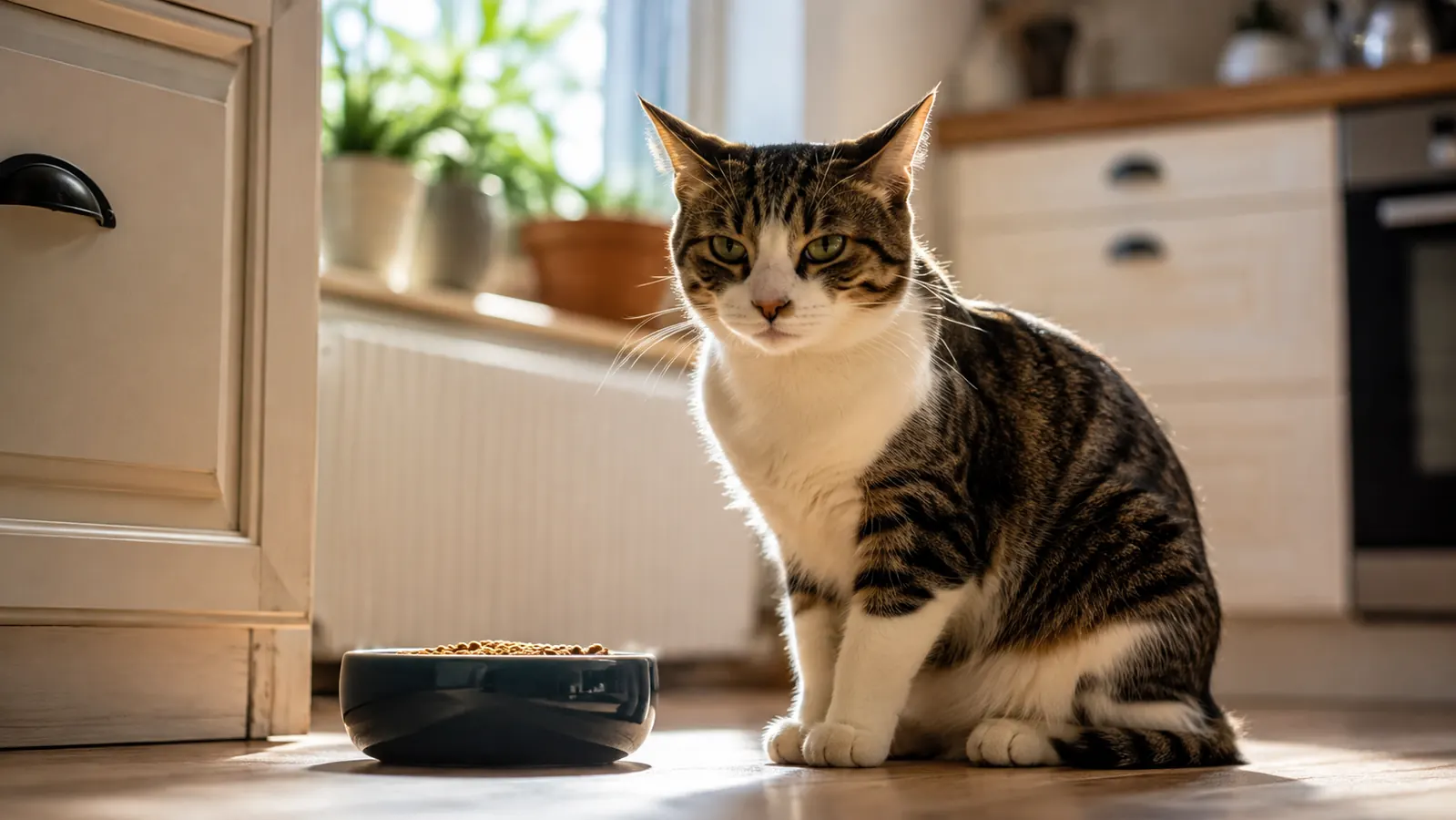
Every cat owner knows the exact moment you start dreading the litter box. You scoop, and you know before you look that the night was a rough one. That was us with Pepper, our 11-year-old cat, for the better part of a year. She had always been particular about food, but somewhere after her tenth birthday her stomach turned genuinely sensitive. Loose stools became the norm. Accidents happened outside the box every week or two. The smell got bad enough that even I, who will clean almost anything without complaint, started finding reasons to put the chore off until morning.
Our vet, at the small two-room practice about twenty minutes from our house, was the one who finally said it plainly. Before we spent money on prescription diets or a stack of tests, she wanted to try a daily probiotic for two months and see what happened. She recommended Purina Pro Plan Veterinary Diets FortiFlora Daily Probiotic Powder. I bought a box that same afternoon, and I will be honest: I was skeptical. Six months later I can tell you, in plain kitchen-table language, exactly what that powder did for Pepper, what it did not do, and whether I plan to keep buying it.
The Quick Verdict
Easily the most useful change we made for Pepper this year. It took about three weeks before I noticed a real difference, it costs more than I would like for something you use every day, and it only works if you remember to give it. Six months in, the litter box is steadier than it has been in years, and that alone keeps me buying it.
Amazon Check Today's Price →The daily powder our vet suggested before anything else
If you are cleaning up after a sensitive-stomach cat and you are tired of guessing at midnight, this is the product I would start with. Our vet recommended it before anything else, and three weeks of patience was all it took for us to see it working.
Amazon Check Today's Price on Amazon →Why Pepper Needed This in the First Place
To understand why a daily probiotic became part of Pepper's routine, you need to know what she was like before. She has always been a light eater, the kind of cat who takes three bites of breakfast and then wanders off to watch the birds through the screen door. For her first nine years, that was just her personality. Then it gradually turned into a problem. Her stools got soft, then loose, and the number of times she visited the box without covering anything started to climb. She also began turning her nose up at food she had loved for years, which for a cat who already barely ate was genuinely worrying.
The vet's first question was whether Pepper was vomiting, losing weight, or drinking more water than usual. She was doing none of those things, so the vet explained that this was probably not a disease but a digestive system getting older and fussier, the way joints do. A daily probiotic supports the balance of bacteria in the gut, she said, and it was one of the least invasive things to try before moving on to blood work or prescription food. She recommended Purina Pro Plan's FortiFlora specifically, and I figured I had nothing to lose except the cost of one box.
How I've Used It
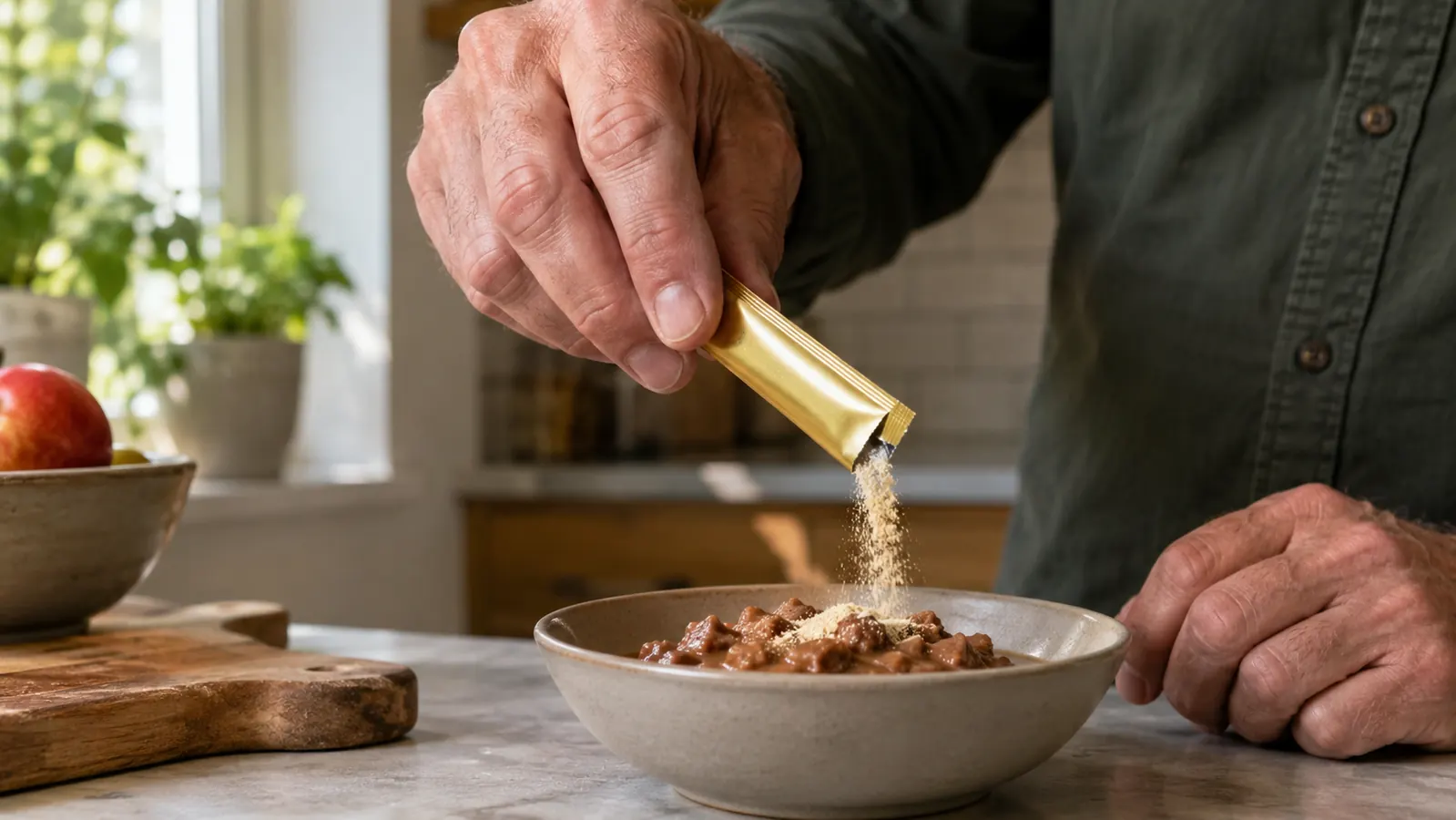
The routine is simple: one packet a day, every day, on top of Pepper's morning meal. I tear open the little packet, tap the powder over her wet food, and stir it in with the back of a spoon. Pepper eats wet food in the morning and dry food at night, and the powder goes on the wet meal because when I tried it on dry kibble she simply refused to eat. The label says one packet per day, which means no measuring and no decisions. That is exactly the kind of supplement I will actually keep up with.
It took me two tries to get the serving details right. If the wet food is straight out of the refrigerator, the powder does not mix in well, so now I warm her breakfast for a few seconds or add a little warm water and stir. Powder sprinkled on top of dry food sat there untouched. Powder mixed into a small amount of wet food disappeared completely, and Pepper licked the bowl clean, which honestly surprised me given how picky she had become about everything.
I keep the box in a kitchen cabinet away from the stove, and I keep a few spare packets in the bin where I store her food so I never run out on a Sunday. On the rare day I forgot to give it to her, I did not see a disaster the next morning, but I saw a difference within about a day and a half, and that was enough to make me careful about remembering.
What Is Actually in That Little Packet
The label reads like a legal document, so here is the plain-language version. The active ingredient is a probiotic strain called Enterococcus faecium, which is one of the strains studied for digestive support in cats. The whole design of the product is about keeping that strain useful, and the manufacturer goes to some trouble to protect it. Most of the remaining ingredients are there to make the powder something a cat will actually eat, because a supplement does nothing if it stays in the bowl.
Palatability is the thing that makes or breaks any cat supplement, and this is where FortiFlora won me over. Pepper is the pickiest cat I have had in years of owning cats. When I sprinkled the powder over her wet food that first morning, she hesitated for about two seconds and then ate the entire bowl. She has done the same thing almost every morning since. I have watched her refuse a new flavor of canned food that she had begged for an hour earlier, so I do not take her cooperation for granted, and I give Purina Pro Plan credit for making a powder a picky cat will choose on her own.
What I cannot do is explain the microbiology to you, and I am not going to pretend otherwise. I have no veterinary training. I read the label, I asked my vet whether FortiFlora was worth trying, and she said yes. My job here is to tell you what I observed over six months, and to be honest about the line between what I know and what I am only guessing at.
The Six-Month Results, Week by Week
For the first two weeks, nothing happened. I want to be blunt about that because a lot of what you read online will tell you the powder worked overnight. It did not for us. Pepper's stools stayed loose, and I started to wonder whether I had wasted my money. I kept going only because the vet had said to give it a full two months before judging it.
Sometime in the third week, things shifted. I noticed it first in the litter box, not in Pepper. Her stools started coming out formed on more days than not. By the fourth week, that was the norm, and the smell, which had been strong enough to clear a room, settled down to something completely ordinary. I do not have a scientific explanation for you. I have a calendar, and the calendar says the change showed up right around day twenty.
Months two through six have held up. Pepper still has the occasional loose day, and she has had two real accidents since we started, both with a clear trigger, like the morning she got into the pantry and ate something she should not have. That feels like an honest result: not perfect, but radically better. Before FortiFlora, I was cleaning the box twice a day and doing laundry more often than I wanted. Now I scoop once a day like a normal person.
There was one quieter improvement too. Pepper, who for months had been leaving half her breakfast in the bowl, started finishing her meals most mornings. I cannot tell you whether that came from the probiotic or simply from having a steady six months without stomach trouble, but I am not complaining about it either way.
I also watched whether the effect would fade over time, since some supplements seem to stop working once the novelty wears off. Six months in, the improvement has held steady. If anything, Pepper's digestion has become predictable in a way I did not think she was capable of anymore. I will take predictable any day.
What Else I Tried That Did Not Work
I did not jump straight to a supplement. Before I started FortiFlora, I tried canned pumpkin because I had read that extra fiber can help firm things up. It helped a little for a few days, and then Pepper stopped eating it, which ended that experiment. I also switched her to a sensitive-stomach food formula, and she ate it for about ten days before refusing it completely. Cats, I have learned, do not care about your research.
I even tried a generic store-brand probiotic powder once, because it looked like a bargain. Pepper took one sniff and walked away. That was the moment I understood that with a picky cat, the product only works if the cat eats it, and there is no sense paying less for something that ends up in the trash. FortiFlora is the one she will actually eat, and at our house that is the whole ballgame.
Where It Falls Short
Let me be clear about what this product is not. It is not a cure. If your cat has an underlying condition, an infection, or something going on that a probiotic cannot touch, no amount of powder is going to fix it, and you need a vet, not an internet order. It also only works while you use it. This is not a treatment you finish and move on from. It is a daily habit, which makes it an ongoing cost, and you should go into it knowing that.
It is also not automatic. If you forget to give it for a few days, or if you change her food without warning, the old problems will probably creep back. And because Pepper is a senior cat, I stay alert for the bigger warning signs: weight loss, vomiting, drinking too much water, hiding under the bed. The probiotic does not give me permission to stop paying attention, and I would not want one that did.
And then there is the packaging. Every morning brings one small empty packet that goes into the trash. It is a small thing, but when you do it daily for six months it starts to feel wasteful. I understand why they sell it in single-dose packets, because the powder stays fresh and the dose is always right, but I would love a less wasteful option all the same.
What I Liked
- One packet a day with no measuring, and even a notoriously picky cat will eat it
- Stools firmed up around the third week and the change has held for six months
- Recommended by our vet before any expensive tests or prescription food
- Rated 4.7 out of 5 across more than 20,000 reviews on Amazon, which matches what I saw
Where It Falls Short
- It is an ongoing daily expense, not a one-time fix
- It only works as long as you remember to give it every single day
- It will not help if the real problem is an underlying condition your vet has not found yet
- Single-dose packets mean daily waste, and the box runs out faster than you expect
The calendar says the change showed up around day twenty, and it has held for six months. That is the honest measure I go by.
Who This Is For
FortiFlora makes sense if your cat has chronic loose stools or litter box trouble, your vet has ruled out the bigger problems, and you can be patient through a slow start. It is also a good fit if your cat is picky, because a supplement only helps if it actually gets eaten. Give it a full three weeks before you decide whether it is working, because that is how long it took here.
Who Should Skip It
Skip it if your cat is vomiting, losing weight, drinking excessively, or otherwise acting sick. That is a vet visit, not a supplement order. Skip it if you cannot commit to daily use, because an every-other-day probiotic is mostly wasted packets. And if you are hoping for something that will permanently fix a delicate stomach, no powder will do that, and FortiFlora will not pretend otherwise.
Six months in, I am still buying it
If this sounds like your cat, I would have wanted someone to hand me this box six months ago. Read the label, ask your vet, and give it a full three weeks before you make up your mind. That is what I did with Purina Pro Plan FortiFlora, and it is the only reason I am writing this with a cleaner litter box.
Amazon Check Today's Price on Amazon →