

One evening about six months ago, I sat down on the couch and Juno did the thing she does every night: put her head on my knee and sigh. The difference was that I didn't pull back. For a while, an eight year old, 62 pound lab hound mix with serviceable but aging teeth had breath that could clear a room, and I had gotten into the habit of leaning away without even thinking about it. A water additive, a finger brush, and a tube of dental wipes had all failed in their own way. Then I added one Greenies dental chew to her evening routine, just one, every single night. Around the third week, I realized I was no longer bracing myself when she yawned. Six months later, Greenies is still the last thing she eats every day. Here is the full report.
Let me be honest about what this review is not. I am not a veterinarian and I have no interest in pretending otherwise. If your dog has visible tartar, sore gums, or a foul smell that won't quit, please go see your vet, because no chew fixes dental disease. What I can tell you is what happened in our particular house with one particular dog. Juno is picky, her stomach lets me know when a new food disagrees with her, and she has never cared what a package promises. Those are exactly the conditions under which I wanted to test a dental chew.
The Quick Verdict
A daily chew that earned its place in our routine through consistency rather than drama. Breath improved in the third week, the vet's office noticed cleaner teeth at the yearly exam, and a sensitive stomach handled six months without complaint. It is a helpful habit, not a substitute for brushing or for a vet's care.
Amazon Check Today's Price →The Breath Changed in Week Three, Not Week One
That is the realistic timeline from one house with one senior dog. If you want to run the same test, check today's price on Amazon and read the size chart before you order, because the large size is meant for dogs over 50 pounds.
Amazon Check Today's Price on Amazon →How I've Used It
Six months ago, I swapped our existing dental sticks for a box of Greenies large dental chews and made the swap as boring as possible. One chew, right after dinner, every night. Same kibble, same supplements, same walks. I did not change the feeding schedule or add other chews, because if I changed everything at once, I would never know which change mattered. For a product review, that kind of control is more useful than a hundred opinions from people who tried something twice. The large size is meant for dogs in the 50 to 100 pound range, and at 62 pounds Juno sits squarely in the middle of that range.
The first night was the moment I stopped expecting the worst. Juno took the chew from my hand, carried it to her spot on the rug, and worked at it for a good ten minutes, turning it around and around so she could gnaw from every angle. That slow, deliberate chewing is the entire point of a dental chew. She was not swallowing it whole and she was not snapping it into sharp pieces. She was doing the one thing that actually helps teeth, which is spending real time chewing with her back teeth.
Here is a detail that surprised me: by the third month, she got faster. The same chew that took ten minutes in week one took about six minutes by month three. She learned where to bite to break it down quickly, which means I have to stay in the room and watch. I do not leave Juno alone with any edible chew, and Greenies is no exception. The bag says to supervise, and I take that seriously. It takes thirty seconds of my evening to sit there while she works, and it beats the alternative.
What's Actually in These Things
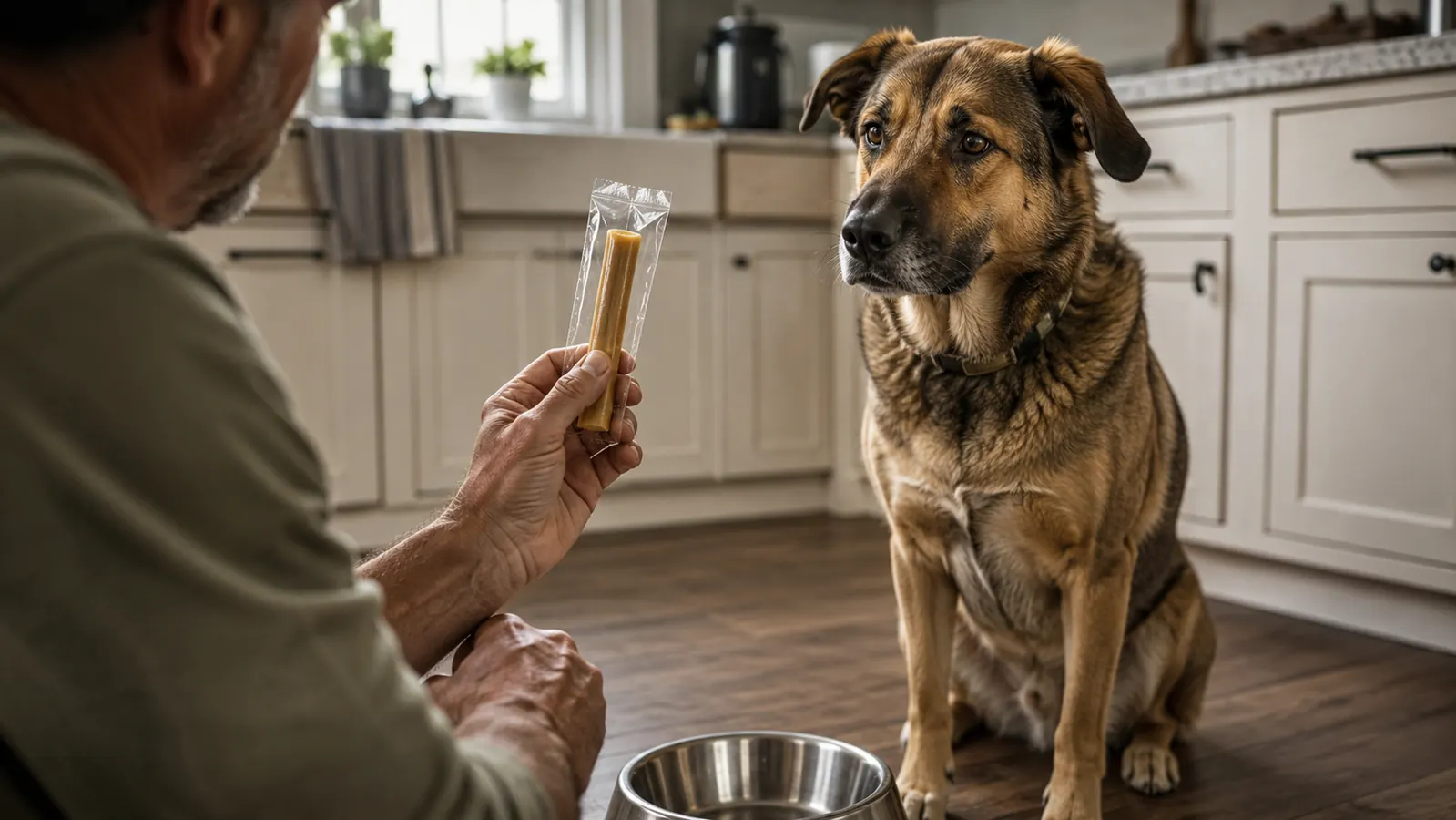
When I first read the ingredient list, I was relieved it was shorter than I expected for something that positions itself as dental care. The main structure is a baked mix built on wheat, glycerin, and fibers, with natural poultry flavor to make it worth chewing. There is no rawhide in it, and there is no hard bone center that could splinter. It has a firm, slightly spongy texture that softens as the dog chews, which is exactly the texture you want if your dog is an enthusiastic gulper.
The bag carries the acceptance seal of the Veterinary Oral Health Council for plaque and tartar control, and I will come back to what our vet's office said at the checkup. But I would put it to a friend this way: the chew does not do the cleaning, the chewing does. What Greenies contributes is a shape and texture that makes real chewing happen on back teeth for minutes at a time instead of three gulps and done. For a dog who will not let you near her mouth with a brush, that mechanical action is the whole ballgame.
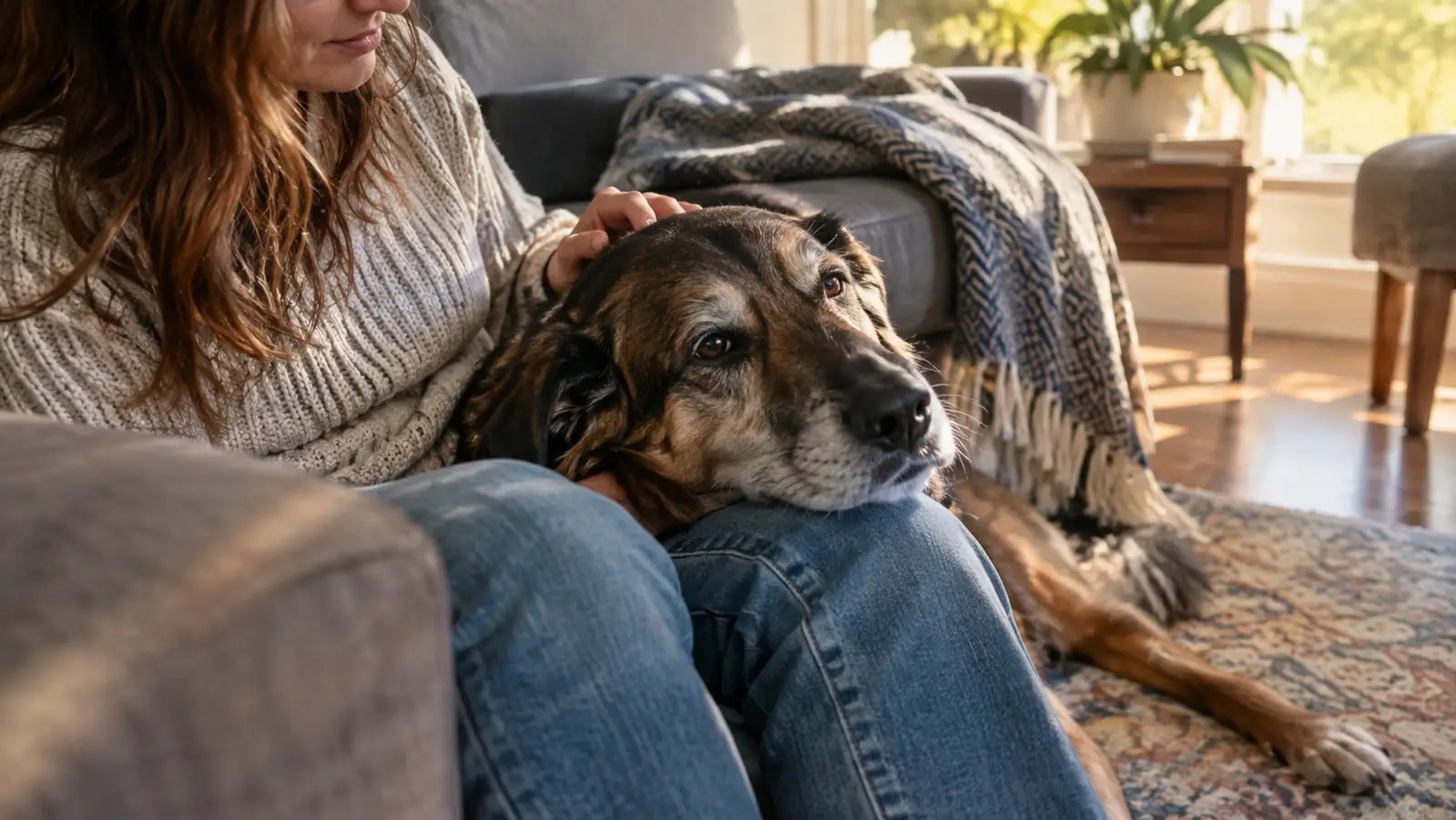
For an older dog, those minutes of chewing matter beyond teeth. Juno is stiff in the hips in the morning and she has slowed down on trail walks, but she still needs to use her mouth and her mind. The chew gives her a low impact job to do at the end of the day, sitting in her favorite spot, working at something with her back teeth. Is that a medical benefit? No. Is it a small quality of life thing? I think it genuinely is, and it is part of why she looks forward to it so much.
What Changed Over Six Months, and What Didn't
The honest timeline is this: for the first two weeks, I noticed almost nothing. Juno's breath was still dog breath at the end of week two, and I started to wonder whether I had talked myself into another expensive habit. Then, sometime in the middle of week three, she yawned right in my face while we were watching television, and I did not flinch. The sharp, sour edge was gone. It was not the smell of a freshly brushed mouth, but it was no longer something I had to brace for. That change has held for six months.
The bigger moment came at her yearly checkup. I did not say anything about the chew before the vet tech looked at Juno's teeth, because I wanted an unbiased read. After a minute of looking, the tech said Juno's teeth looked better than they had the previous fall, with less buildup along the gumline. That is a professional observation from someone who sees dozens of dog mouths a week, and it meant more to me than any claim on a package. For full honesty, her teeth were not perfect, and the vet said she still has a few rough spots that may need attention down the road. But the direction was clear.
The digestion surprise was just as important in our house. New treats usually make Juno's stomach talk back within a day or two, and I braced for that when we started. It never happened. No loose stool, no gurgling, no middle of the night grass eating. Six months of a nightly chew and not one digestive complaint from a dog whose system has opinions about everything. I cannot promise your dog will react the same way, but for a dog with a known sensitive stomach, that is a meaningful data point.
The change I can point to is the one our vet's office noticed: at her yearly checkup, without any prompting from me, the tech said Juno's teeth looked better than they had the year before.
The Drawbacks Nobody Puts on the Bag
Here is the thing I wish someone had told me: a dental chew is a treat, and treats have calories. At Juno's size, one chew a day is the right amount, and I have to hold the line when she looks at me with those hopeful eyes after finishing. If you have a dog who would happily eat three of these in a row, you need to be the adult in the room. The chew is not a meal replacement and it is not a chew toy that lasts all afternoon. For Juno, it is a ten to fifteen minute job, and when it is gone, it is gone.
There is also the supervision question, and I do not want to bury it. Any edible chew carries some risk for a dog who gulps, and Greenies is no exception. The texture is designed to soften and break into small pieces, but I still stay in the room while Juno chews, and I would not give one to a dog who swallows food without chewing. If your dog inhales everything in seconds, talk to your vet before adding any chew to the routine. That is not me being dramatic, that is just the responsible way to use a product like this.
The last drawback is the one nobody wants to hear: this is not a replacement for brushing or for a professional dental cleaning. Greenies made Juno's breath easier to live with and her teeth visibly cleaner at the checkup, but the vet still said she has rough spots that may need attention someday. If you are hoping a chew will get you out of ever brushing your dog's teeth or ever paying for a dental procedure, this product will not do that. It is a good daily habit, not a cure.
Other Chews I Compared It To
I did not land on Greenies without trying a few other things first. Juno went through a phase of loving braided rawhide chews, but I worried about how slowly they softened and how aggressive she got with them. She also tried a popular vegetable based dental chew from a national brand, and she ate it exactly twice before deciding it was not worth her time. The grocery store dental sticks she had before were cheap, but they did not seem to do anything for her breath, and she finished them in about four bites.
What made Greenies different in our house was the combination of duration and enthusiasm. Juno actually chews these, she chews them long enough to matter, and she has stayed interested for six months, which is longer than any other treat has held her attention. Other chews either disappeared too fast or sat under the sofa until I found them weeks later. A dental chew only works if the dog actually chews it, and this is the first one Juno has treated like a job she wants to do.
What I Liked
- Breath was noticeably easier to live with by the third week of daily use
- Juno chews each one for several minutes, which is the point of a dental chew
- Our vet's office noticed cleaner teeth at the yearly checkup
- No digestive upset in six months, even for a dog with a sensitive stomach
- The texture softens as the dog chews, which is gentler than a hard bone
Where It Falls Short
- The chew does not last all evening and my dog now expects it every single night
- It is a treat with calories and I have to limit Juno to one per day
- It is not a replacement for brushing or for a professional dental cleaning
- Supervision is required, especially for a dog who tends to gulp food
Who This Is For
Greenies large dental chews are for dogs in the 50 to 100 pound range who actually like to chew and who need a little help between dental cleanings. They are especially good for owners who cannot brush their dog's teeth regularly. I will be the first to admit that brushing is the gold standard, but a senior dog who is stiff in the hips and wary of having her mouth handled is not going to sit still for a daily brushing. A chew she actually enjoys is a realistic middle ground.
These are also a good fit if you have a dog with a sensitive stomach who has reacted badly to other treats. That was my biggest worry going in, and it turned out to be a nonissue. If you want a daily dental habit that your dog will actually look forward to, and you understand that it is a supplement to real veterinary care, Greenies is worth a spot in your cabinet.
Who Should Skip It
Skip Greenies if your dog has a known allergy to wheat, because the original recipe is built on a wheat base. The brand makes other formulations, but you should check those labels carefully or ask your vet before trying them. You should also skip these if your dog inhales food without chewing, because no edible chew is safe for a gulper, no matter how well it is designed. When in doubt, your vet is the right person to ask.
The other reason to skip them is if you are expecting a chew to replace dental care. If your dog already has significant tartar, red gums, or a smell that makes you worry, do not hand her a chew and hope for the best. Book the vet visit, get a proper assessment, and ask your vet whether a daily dental chew is a good idea after that. Greenies is a helpful addition to a dental care routine, but it is not the routine itself.
Six Months In, They Are Still in Our Cabinet
That is the highest compliment I can pay a dog product. If your senior dog needs a little help between dental visits, check today's price on Amazon and see whether the large size fits your dog's weight range.
Amazon Check Today's Price on Amazon →